

Psychedelics can both cause brain cancer and heart disease?
Perhaps.....

Your story starts many years ago, in a country far, far away when a miracle appetite suppressant (Fen/Phen) was discovered to cause (in perhaps as many as 30% of the individuals) valvular heart disease. This led to, among other things, billions of $$ of liability for Wyeth.
Curiously (this was the late 1990’s!) there was almost no interest in discovering the underlying mechanism responsible for this serious and life-threatening side-effect
As it was known that fenfluramine (like MDMA; aka Ecstasy) releases serotonin, the fear was that any drug which altered serotonin levels (think SSRI’s like PROZAC; read my NEJM article for details and refs) would cause valvular heart disease.
Alas, NO ONE SEEMED TO WORRY ENOUGH TO FIND OUT IF THIS WAS A LEGITIMATE FEAR
By virtue of a grand cosmic joke, in 1998 my lab was fortunate to receive the NIMH Psychoactive Drug Screening Program Contract (PDSP) and we were searching for clients and projects.
Richard Rothman (the brother of Nobel Laureate Jimmy Rothman) a long-time friend (His thesis advisor was on my thesis; we did postdocs in the same lab, next to each other at NIMH; a fellow psychiatrist MD/PhD) wondered if we could use the resources of the PDSP to test the following hypothesis:
Test drugs known to induce valvular heart disease; these positive control drugs were (±)-fenfluramine; (+)-fenfluramine; (−)-fenfluramine; its metabolites (±)-norfenfluramine, (+)-norfenfluramine, and (−)-norfenfluramine; ergotamine; and methysergide and its metabolite methylergonovine.
Test drugs with similar known pharmacology which do not cause valvular heart disease: The negative control drugs were phentermine, fluoxetine, its metabolite norfluoxetine, and trazodone and its active metabolite m-chlorophenylpiperazine.
The drugs were tested against what was (at the time) a LARGE PANEL OF DRUG TARGETS
Here’s what we found:
(±)-, (+)-, and (−)-Norfenfluramine, ergotamine, and methylergonovine all had preferentially high affinities for the cloned human serotonin 5-HT2B receptor and were partial to full agonists at the 5-HT2B receptor.
“Conclusions—Our data imply that activation of 5-HT2B receptors is necessary to produce VHD and that serotonergic medications that do not activate 5-HT2B receptors are unlikely to produce VHD. We suggest that all clinically available medications with serotonergic activity and their active metabolites be screened for agonist activity at 5-HT2B receptors and that clinicians should consider suspending their use of medications with significant activity at 5-HT2B receptors.”
We later found that all psychedelic drugs along with MDMA and its’ active metabolite MDA are 5-HT2B agonists and subsequent studies have indicated a link between valvular heart disease and chronic MDMA use. We also predicted (and this was confirmed in large-scale studies reported in NEJM) that pergolide and cabergoline would also cause valvular heart disease….
IT IS NOW ESTABLISHED THAT DRUGS WITH 5-HT2B AGONIST ACTIVITY CAN CAUSE VALVULAR HEART DISEASE IN HUMANS
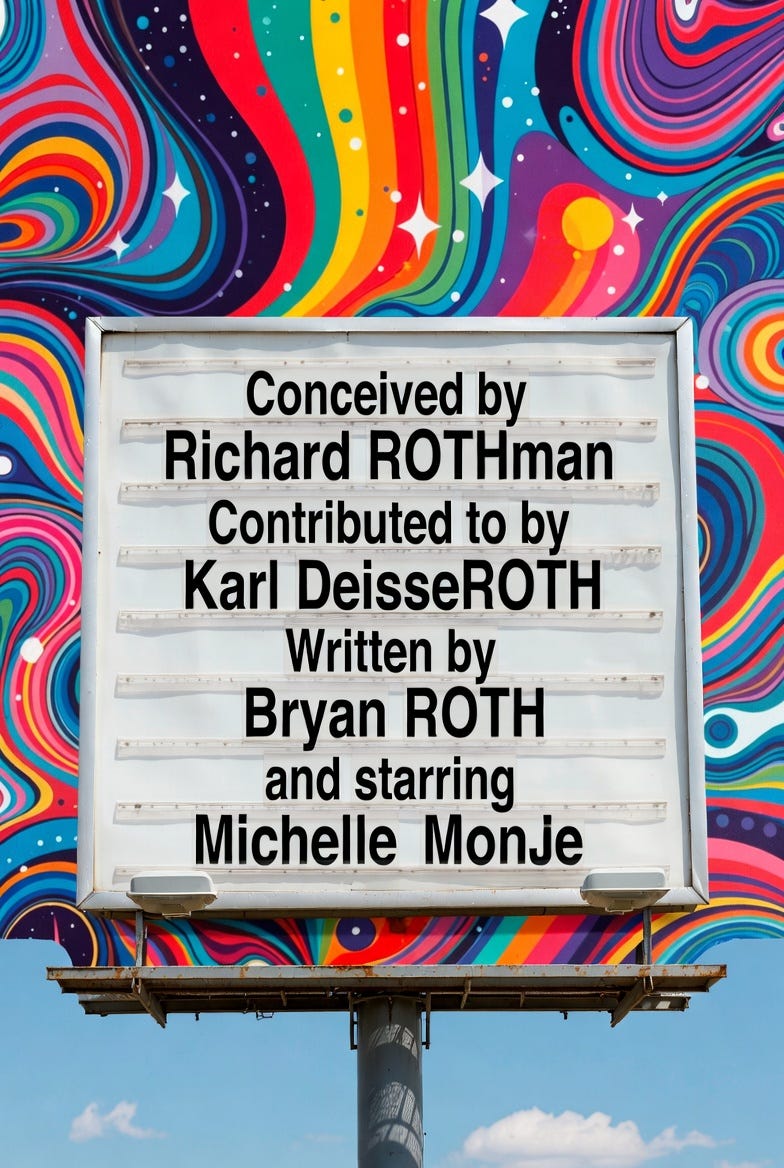
Now, Michelle Monje’s lab (with contributions from her husband Karl DeisseROTH) has shown that psychedelic drugs are mitogenic for certain tested gliomas (in mice) and do so by activating 5-HT2A receptors! The authors conclude:
“Clinical decision-making regarding the use of serotonergic psychedelics in patients with brain tumors should include consideration of possible growth-promoting effects.”
I agree and also point out long-standing work which shows why this is a reasonable concern:
5-HT2A (and 5-HT2C) receptors can act (sort of) like ONCOGENES (Discovered by David Julius who later got the Nobel Prize for Trp channel). This was first reported in 1989
It had long been known from my work (in the 1980s!) that 5-HT2 receptors activate the same pathway which is activated by tumor promoting phorbol esters
My lab and others had long studied one of the two known cell lines which endogenously express 5-HT2A receptors: C6 glioma cells
It has loooong been proposed that serotonin is a trophic factor
No surprise, then, as:
Gliomas are known to express 5-HT2A receptors
5-HT2A receptor activation is mitogenic
5-HT2A receptors can trigger malignant transformation
They do this via the PKC (phorbol ester activated) pathway
The moral of the story is:
If someone named ROTH tells you that a drug may have a previously unrecognized but potentially lethal side-effect: PAY ATTENTION!

Great question--here's where there is an urgent need for US Govt sponsored research--perhaps headed up by NIDA? We simply do not know, sadly.
https://doi.org/10.1016/j.phrs.2025.108080 how exactly is that with that "all psychedelics are 5ht2b agonists" ?